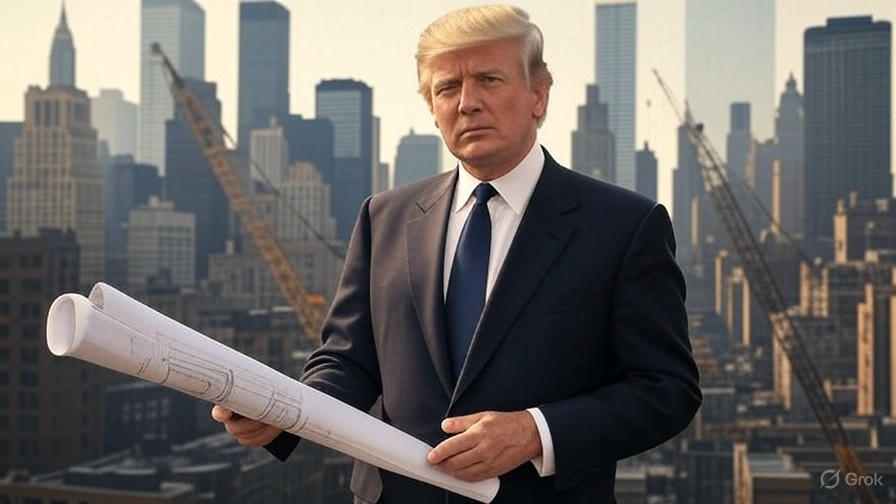
Donald Trump Early Business Ventures:The story of Donald Trump’s rise to becoming a global business icon begins with his early business ventures and the development of the Trump Organization.
Trump’s entry into the real estate world was marked by significant investments and strategic decisions that laid the foundation for his real estate empire. His ability to navigate complex business deals and build a reputable brand played a crucial role in his success.

The growth of Trump’s business ventures was not without challenges, but his resilience and innovative approach helped him overcome obstacles and achieve his goals.
Key Takeaways
- The Trump Organization was instrumental in Donald Trump’s rise to business prominence.
- Early investments in real estate set the stage for Trump’s future success.
- Strategic decision-making was key to expanding Trump’s business empire.
- Trump’s ability to navigate complex business deals contributed to his reputation.
- The development of Trump’s real estate empire was marked by significant milestones.
Family Background and Donald Trump Early Business Ventures
The Trump family’s foray into real estate began with Fred Trump’s successful projects in Queens, New York. Fred Trump’s construction of middle-class housing in Queens not only established the Trump family’s presence in real estate but also influenced Donald Trump’s business acumen.
Fred Trump’s Real Estate Empire in Queens
Fred Trump’s real estate empire was built on the back of his ability to develop affordable housing in Queens. His company constructed thousands of apartments, earning him a reputation as a savvy businessman.
Building Middle-Class Housing
Fred Trump’s focus on middle-class housing helped him build a loyal customer base and generated significant revenue. His ability to keep costs low while maintaining quality was key to his success.
| Project | Location | Units |
|---|---|---|
| Beach Haven Apartments | Queens, NY | 1,600 |
| Shore Haven | Queens, NY | 1,200 |
| Trump Village | Queens, NY | 3,700 |
Business Practices and Controversies
Fred Trump’s business practices were not without controversy. He was known to have taken advantage of government programs and faced allegations of discriminatory practices.
Early Influences on Young Donald Trump and His Early Business Ventures
Donald Trump grew up watching his father build a real estate empire. The lessons he learned from Fred Trump about deal-making and negotiation were invaluable.
Lessons from His Father
Donald Trump has often credited his father with teaching him the importance of being tough and resilient in business.
Developing a Business Mindset
Working with his father helped Donald develop a keen business sense and an understanding of how to navigate complex real estate transactions.
Education and First Steps in Donald Trump Early Business Ventures
Before becoming a renowned businessman, Donald Trump underwent rigorous training and education that honed his skills. Trump’s educational journey was marked by significant milestones that shaped his business acumen.
New York Military Academy Years
Trump’s time at the New York Military Academy was instrumental in instilling discipline and leadership qualities. The structured environment helped him develop a strong work ethic, which would later benefit his business career.
Wharton School Education and Business Training
At the Wharton School, Trump received formal training in business and finance. This education provided him with a solid foundation in real estate development, economics, and management.
Joining Trump Management Company
Upon joining the Trump Management Company, Trump took on early responsibilities that gave him hands-on experience in real estate.
Early Responsibilities
Initially, Trump was involved in various aspects of the family business, learning the intricacies of real estate development and management.
Learning Real Estate Development
Through his work, Trump gained valuable insights into the process of identifying opportunities, managing projects, and navigating the complexities of real estate development.
Donald Trump’s Early Business Ventures
Taking the reins of the Trump Organization, Donald Trump began to make his mark on the real estate industry. Donald Trump early business ventures were characterized by strategic decisions that would lay the groundwork for his future success.
Taking Control of the Trump Organization
Upon assuming control, Trump focused on revitalizing and expanding the Trump Organization’s portfolio. He brought a fresh perspective to the family business, emphasizing brand development and aggressive marketing strategies.
Key Initiatives:
- Renovating existing properties to enhance their value
- Identifying new investment opportunities in Manhattan
- Building a strong brand identity for the Trump Organization
First Major Development Projects
One of Trump’s first major development projects was the renovation of the Commodore Hotel. This project showcased Trump’s ability to transform underperforming assets into successful ventures.
Renovation of the Commodore Hotel
The Commodore Hotel renovation was a significant undertaking that demonstrated Trump’s vision for large-scale projects. By partnering with Hyatt, the hotel was rebranded as the Grand Hyatt, a move that significantly boosted its profile.
Early Manhattan Investments: A Look at Donald Trump’s Early Business Ventures
Trump’s early investments in Manhattan real estate marked a strategic shift towards high-value developments. These investments not only yielded substantial returns but also elevated Trump’s profile in the real estate community.
| Project | Year | Outcome |
|---|---|---|
| Commodore Hotel Renovation | 1978 | Rebranded as Grand Hyatt |
| Manhattan Investment Initiatives | Early 1980s | Significant returns and increased visibility |
Transition from Queens to Manhattan Real Estate
Trump’s transition from Queens to Manhattan real estate was a strategic move that positioned him for greater success. This shift was accompanied by efforts to build political connections that would facilitate his business ventures.
Strategic Market Positioning
By focusing on Manhattan, Trump was able to tap into a more lucrative market, enhancing his reputation and financial standing.
Building Political Connections
Trump also recognized the importance of political connections in facilitating his real estate ventures. Building relationships with key political figures helped smooth the path for his projects.
Through these Donald Trump early business ventures, Trump established a foundation for his future endeavors, demonstrating his capacity for strategic planning and execution in the competitive real estate market.
The Grand Hyatt and Trump Tower Projects
The 1980s were pivotal for Donald Trump’s career, marked by the development of the Grand Hyatt and Trump Tower, two projects that would cement his reputation in luxury real estate.
Commodore Hotel Transformation into Grand Hyatt
The transformation of the Commodore Hotel into the Grand Hyatt was a landmark project for Trump. This venture was significant not only for its scale but also for its innovative approach to revitalizing a neglected property.
Securing Tax Abatements
One of the key factors in the success of the Grand Hyatt project was Trump’s ability to secure substantial tax abatements. This was achieved through negotiations with the City of New York, showcasing Trump’s skill in navigating complex bureaucratic processes.
Partnership with Hyatt Corporation
The Grand Hyatt project was a collaboration between Trump and the Hyatt Corporation. This partnership brought together Trump’s development expertise and Hyatt’s hospitality experience, resulting in a hotel that met the highest standards of luxury and service.
Development of Trump Tower on Fifth Avenue:Donald Trump Early Business Ventures
Trump Tower, located on Fifth Avenue, is another iconic development that has become synonymous with luxury and opulence. The project’s success can be attributed to its architectural design, luxury positioning, and effective marketing strategies.
Architectural Design and Luxury Positioning
The architectural design of Trump Tower was led by renowned architects Der Scutt and Poor. The building’s distinctive design and luxurious finishes helped position it as a premier residential and retail destination.
Marketing Strategies and Celebrity Tenants
Trump Tower’s marketing strategy included attracting high-profile tenants, such as celebrities and business leaders. This approach not only filled the building with prestigious occupants but also generated significant publicity, further enhancing the Trump brand.
- “Trump Tower is a testament to the power of innovative design and luxury living. Its impact on the Manhattan skyline and the global real estate market is undeniable.”
Impact on Trump’s Public Profile
The success of the Grand Hyatt and Trump Tower projects significantly elevated Trump’s public profile. These developments showcased his ability to conceive and execute large-scale, complex projects, establishing him as a major player in the world of luxury real estate.
- The Grand Hyatt and Trump Tower projects demonstrated Trump’s business acumen and ability to transform visions into reality.
- These projects played a crucial role in shaping Trump’s public image as a successful and innovative developer.
- The success of these ventures paved the way for future projects, further expanding Trump’s influence in the real estate industry.
Atlantic City Casino Investments
The allure of Atlantic City’s gaming industry drew Donald Trump into a series of high-stakes investments. Trump’s ventures in Atlantic City began in the 1980s, a period that saw significant growth in the city’s casino sector.
Trump Plaza and Trump’s Castle Acquisitions
Trump’s entry into Atlantic City’s casino market began with the acquisition of existing properties. He took over the Trump Plaza and Trump’s Castle, integrating these into his portfolio.
Entry into the Gaming Industry
Trump’s foray into the gaming industry through these acquisitions marked a significant expansion of his business interests. The Trump Plaza, in particular, became a notable addition to his portfolio.
Operational Challenges
Despite the initial successes, Trump’s Atlantic City ventures faced operational challenges, including intense competition and regulatory hurdles. Managing these challenges became crucial to the long-term viability of his casino investments.
The Taj Mahal Casino Development: Donald Trump Early Business Ventures
The development of the Taj Mahal casino represented a major milestone in Trump’s Atlantic City strategy. This project was touted as the “Eighth Wonder of the World.”
Financing the “Eighth Wonder of the World”
Financing the Taj Mahal required significant capital investment. Trump managed to secure the necessary funding, albeit at considerable cost, to bring this ambitious project to fruition.
Competition in Atlantic City
The Taj Mahal’s launch intensified competition in Atlantic City’s casino market. Trump’s ability to navigate this competitive landscape was crucial to the success of his casino investments.
Management Approach to Casino Operations
Trump’s management approach to his casino operations in Atlantic City focused on creating a compelling customer experience while maintaining operational efficiency. This dual focus was key to differentiating his casinos in a crowded market.
Business Expansion Beyond Real Estate
Beyond his real estate ventures, Donald Trump expanded his business portfolio into various other industries. One of his most notable ventures was the Trump Shuttle airline service.
Trump Shuttle Airline Venture
In the late 1980s, Trump entered the airline industry by acquiring the Eastern Air Shuttle service, renaming it Trump Shuttle. This move was part of his strategy to diversify his business interests.
Acquisition and Rebranding
The acquisition of the Eastern Air Shuttle was a significant deal, with Trump paying $380 million for the service. He invested heavily in rebranding, including painting the planes with the Trump logo.
Operational Challenges and Outcome
Despite the initial fanfare, Trump Shuttle faced operational challenges, including high operating costs and intense competition. The venture ultimately proved financially challenging, and Trump sold the service in 1992.
Sports Team Ownership and USFL Involvement
Trump also ventured into sports team ownership, most notably with his involvement in the United States Football League (USFL) with the New Jersey Generals. He attempted to shift the league’s schedule to compete directly with the NFL.
Early Trump Brand Licensing Initiatives and Donald Trump Early Business Ventures
Trump explored brand licensing opportunities, leveraging his growing fame. This included deals in publishing and product endorsements.
Books and Publishing Deals
Trump authored several books, including “The Art of the Deal,” which became a bestseller. His publishing deals further enhanced his brand visibility.
Product Endorsements
Trump also engaged in product endorsements, further expanding his brand’s reach. These initiatives were part of his broader strategy to build a recognizable and lucrative brand.

Financial Challenges and Bankruptcies
As the early 1990s unfolded, Donald Trump faced considerable financial strain, testing his business acumen and resilience. The period was marked by a significant debt crisis and a downturn in the real estate market, factors that would challenge even the most seasoned business leaders.
The Early 1990s Debt Crisis
The early 1990s were particularly challenging for Trump’s business empire, with two major factors contributing to the financial strain: overextension in Atlantic City and a real estate market downturn.
Overextension in Atlantic City
Trump’s aggressive expansion into Atlantic City, including the development of casinos such as the Taj Mahal, placed a substantial financial burden on his organization. The high costs associated with these ventures, coupled with a decline in the local economy, strained Trump’s financial resources.
Real Estate Market Downturn
Concurrently, the real estate market experienced a significant downturn, affecting the value of Trump’s assets and reducing the income generated by his properties. This downturn further exacerbated the financial challenges faced by Trump’s business empire.
Corporate Bankruptcies and Restructuring
In response to the financial challenges, Trump’s companies underwent significant restructuring. This involved negotiating with lenders and managing personal financial guarantees.
Negotiating with Lenders
A critical aspect of the restructuring process was negotiating with lenders to restructure debt obligations. This complex process required careful financial management and a deep understanding of the legal and financial implications of the debt.
Personal Financial Guarantees
Trump had provided personal guarantees for many of his business loans, which put his personal assets at risk. Managing these guarantees was crucial to mitigating the financial impact of the bankruptcies.
- “You have to have a lot of guts and be willing to take risks. And that’s what I did.”
Recovery Strategies and Business Lessons
In the aftermath of the financial crisis, Trump implemented several recovery strategies, including a shift towards a licensing business model and efforts to rebuild financial credibility.
Shift to Licensing Business Model
One of the key strategies was transitioning towards a licensing business model, which allowed Trump to generate revenue without the significant capital expenditures associated with property development.
Rebuilding Financial Credibility
Rebuilding financial credibility was essential for restoring relationships with lenders and investors. This involved a combination of financial restructuring, transparent communication, and a demonstrated commitment to meeting financial obligations.
Through these experiences, Trump gained valuable insights into financial management and risk mitigation, lessons that would inform his future business decisions.
Business Rebound and Brand Development
Trump’s ability to rebound from financial difficulties was significantly enhanced by his appearance on The Apprentice. This television show not only helped him regain his financial footing but also played a crucial role in expanding his brand globally.
The Apprentice and Media Presence Impact
The success of The Apprentice was a turning point in Trump’s career, providing him with a platform to showcase his business acumen and charismatic leadership style. The show’s popularity led to increased brand visibility and recognition.
Television Success and Brand Visibility
The Apprentice ran for several seasons, making Trump a household name and associating his brand with success and entrepreneurship. The show’s format, where contestants competed to work for Trump, highlighted his role as a decisive and demanding leader.
Catchphrases and Public Persona
Trump’s catchphrases, such as “You’re fired!” became ingrained in popular culture, further enhancing his public persona. This media presence helped to rebrand Trump as a savvy businessman and television personality.
International Real Estate Expansion
Following his media success, Trump expanded his real estate ventures internationally. The Trump Organization developed properties in various countries, leveraging the Trump brand to attract international investors and clients.
Trump-Branded Properties Worldwide
Trump-branded properties were developed in several countries, including the United Arab Emirates, Canada, and Indonesia. These projects were often marketed through licensing agreements, with the Trump Organization receiving royalties.
Partnership and Licensing Arrangements
The Trump Organization entered into various partnership and licensing arrangements to facilitate international development. These agreements allowed local developers to use the Trump brand in exchange for fees and royalties.
Trump Organization’s Evolution as a Business
Under Trump’s leadership, the Trump Organization evolved into a diversified business entity. The company expanded beyond real estate into hospitality, entertainment, and branding.
Family Involvement in Operations
Trump’s children, including Donald Jr., Ivanka, and Eric, became increasingly involved in the operations of the Trump Organization. This family involvement helped to ensure the continuity of Trump’s business legacy.
Diversification of Revenue Streams
The Trump Organization diversified its revenue streams through various business ventures, including property management, licensing, and entertainment. This diversification helped to stabilize the company’s financial performance.
Here is a summary of Trump’s business rebound and brand development strategies:
| Strategy | Description | Impact |
|---|---|---|
| Media Presence | Appearance on The Apprentice | Increased brand visibility and recognition |
| International Expansion | Development of Trump-branded properties worldwide | Global brand recognition and revenue growth |
| Business Diversification | Expansion into hospitality, entertainment, and branding | Stabilized financial performance and reduced dependence on real estate |

Key Business Strategies and Negotiation Tactics
Understanding Donald Trump’s business strategies and negotiation tactics provides insight into his achievements and setbacks. Throughout his career, Trump has employed a variety of techniques to negotiate deals and promote his brand.
Trump’s Approach to Deal-Making
Trump’s deal-making strategy often involves leverage and positioning techniques. By carefully positioning himself in negotiations, Trump can gain an advantage. This approach is complemented by his ability to assess risks effectively.
Leverage and Positioning Techniques
Leverage is crucial in Trump’s negotiation tactics. He uses various forms of leverage, including financial, relational, and informational, to influence the outcome of negotiations.
Risk Assessment Methods
Trump’s risk assessment involves evaluating potential risks and rewards. This helps him make informed decisions that minimize exposure to adverse outcomes.
Marketing and Self-Promotion Techniques
Effective marketing and self-promotion have been key to building the Trump brand. Trump uses media relations and publicity stunts to keep his brand in the public eye.
Media Relations and Publicity Stunts
Trump has mastered the art of creating publicity stunts that garner significant media attention. This not only promotes his projects but also enhances his public image.
Building the Trump Brand Value
The Trump brand is built on a reputation for quality and luxury. By associating his name with high-end projects, Trump has increased the brand’s value over time.
Management Philosophy and Leadership Style
Trump’s management philosophy emphasizes strong leadership and decisive decision-making. His leadership style involves delegating tasks effectively and building a competent team.
Decision-Making Process
Trump’s decision-making process is characterized by a willingness to take calculated risks. He relies on his intuition and experience to guide his decisions.
Delegation and Team Building
Effective delegation is a key aspect of Trump’s management approach. By empowering his team members, Trump can focus on high-level strategic decisions.
Conclusion: The Legacy of Trump’s Early Business Career
Donald Trump early business ventures laid the foundation for his future success, shaping his identity as a businessman and entrepreneur. Through his ventures, particularly in real estate, Trump established the Trump Organization as a significant player in the industry.
Trump early business ventures, including his approach to deal-making and marketing, contributed to his growth and recognition. The development of iconic projects like Trump Tower and the Grand Hyatt showcased his ability to transform ambitious ideas into reality.
The legacy of Trump early business ventures is multifaceted, reflecting both the challenges he faced and the lessons he learned. His experiences, including financial difficulties and bankruptcies, ultimately strengthened his business acumen and resilience.
Today, the Trump Organization stands as a testament to Trump’s early endeavors, demonstrating the lasting impact of his initial forays into the business world. As a prominent figure, Trump’s early business career continues to influence his public image and entrepreneurial pursuits.