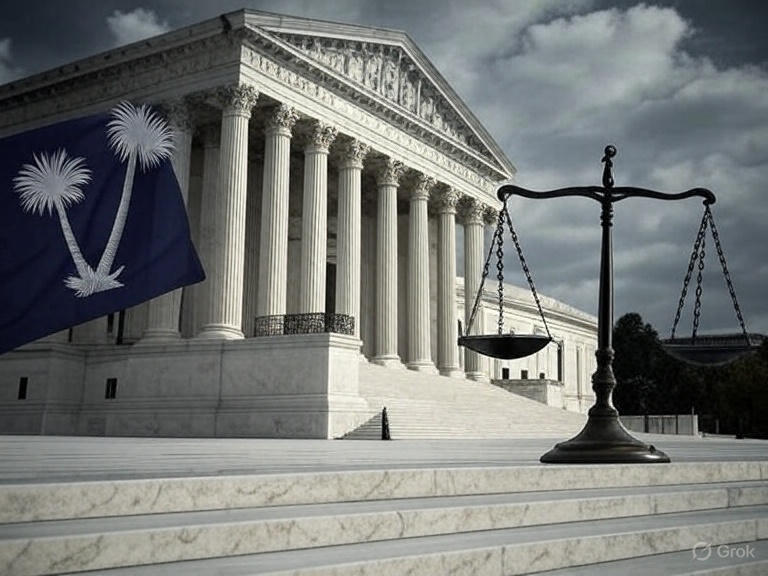
Supreme Court Sides with South Carolina on Planned Parenthood Funding
Supreme Court Limits Medicaid Patients’ Right to Sue Over Provider Choice
In a significant decision with national implications, the Supreme Court has ruled in favor of South Carolina in its years-long attempt to block Planned Parenthood from accessing Medicaid funding. The court’s 6-3 ruling concluded that Medicaid recipients cannot sue states to enforce their right to choose their preferred health care provider.
This decision, issued on Thursday, effectively supports South Carolina’s move to defund Planned Parenthood, despite the group providing a wide range of reproductive and general health services.
You can learn more about Medicaid policies via the Centers for Medicare & Medicaid Services (CMS) and federal court guidelines at supremecourt.gov.
Supreme Court Ruling: What’s the Core Legal Argument?
Writing for the majority, Justice Neil Gorsuch clarified that the federal law governing Medicaid does not explicitly grant individuals the right to sue states over their choice of medical provider. According to Gorsuch:
- “Congress knows how to give a grantee clear and unambiguous notice that, if it accepts federal funds, it may face private suits asserting an individual right to choose a medical provider… But that is not the law we have.”
This interpretation means states can now restrict which providers receive Medicaid funds, and patients have limited legal power to challenge those decisions—even if it affects their access to care.
Supreme Court Decision Sparks Dissent Among Liberals
Justice Ketanji Brown Jackson, joined by Justices Sonia Sotomayor and Elena Kagan, strongly dissented. Jackson accused the court of eroding civil rights protections by blocking Medicaid patients from enforcing their rights:
- “South Carolina asks us to hollow out that provision so that the state can evade liability for violating the rights of its Medicaid recipients to choose their own doctors. The court abides South Carolina’s request. I would not.”
Jackson referred to the 1871 Civil Rights Act, which was designed to enable citizens to sue over government violations of individual rights.
Supreme Court’s Decision Follows Years of Anti-Abortion Advocacy
Although federal funds cannot be used for abortion, states like South Carolina have targeted Planned Parenthood over concerns that any funding indirectly supports abortion services.
Planned Parenthood offers services like:
- Contraception
- Cancer screenings
- STI testing
- Pregnancy testing
Despite these broader services, opponents argue that redirecting Medicaid funds from Planned Parenthood undermines its ability to support abortion access—even when such services are provided within legal bounds.
Background: How This Reached the Supreme Court
The case began in 2018, when Governor Henry McMaster signed an executive order to block Planned Parenthood South Atlantic from receiving Medicaid reimbursements.
A Medicaid recipient, Julie Edwards, joined a lawsuit, claiming her civil rights were violated. A lower federal court initially ruled in her favor, but the state appealed. Eventually, the Supreme Court agreed to hear the case, setting the stage for Thursday’s decision.
For more details on federal civil rights laws, visit the U.S. Department of Justice Civil Rights Division.
What’s Next for Medicaid and Abortion Access?
This ruling adds another layer to the legal rollback of abortion protections in the U.S., following the court’s 2022 decision to overturn Roe v. Wade.
Currently, South Carolina enforces a six-week abortion ban, making abortion access extremely limited. Despite this, Planned Parenthood facilities in Charleston and Columbia continue to provide legal reproductive care under state law.
To explore official abortion law status by state, visit reproductiverights.gov or check state-level updates on scdhhs.gov, South Carolina’s Department of Health and Human Services.
Summary
The Supreme Court ruled 6-3 that Medicaid recipients cannot sue to enforce their choice of provider.
The ruling strengthens South Carolina’s push to cut off funding to Planned Parenthood.
Liberals on the court say the ruling undermines long-standing civil rights protections.
Planned Parenthood still provides essential services under tight abortion laws in South Carolina.
This decision marks a pivotal moment in the ongoing legal battles around health care access, Medicaid rights, and reproductive freedom in the United States.