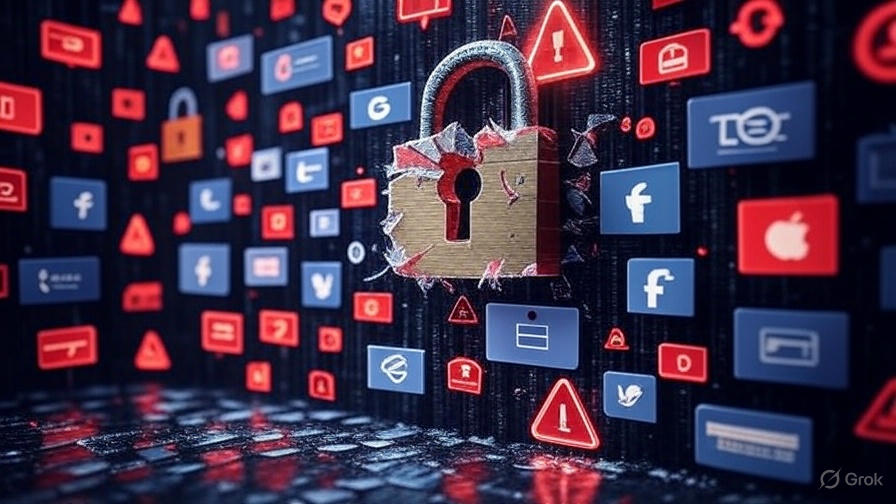
A Wake-Up Call for Online Security
In one of the biggest cybersecurity breaches in history, over 16 billion passwords linked to popular platforms like Facebook, Google, and Apple have been exposed. This massive leak includes login credentials for social media, email, cloud storage, banking services, and more—leaving millions at risk of identity theft and online fraud.
What Happened?
Cybersecurity researchers monitoring online activity uncovered dozens of data collections, each holding millions to billions of login details. These aren’t just usernames and passwords—they include cookies, session tokens, and other data that can allow hackers to bypass even two-factor authentication.
This leaked data is believed to have been collected using infostealer malware—a type of malicious software that silently steals sensitive information from your devices.
The exposed records came from 30 different sources, with no single known hack, suggesting widespread and ongoing activity by cybercriminal groups.
Are My Accounts Affected?
With a staggering 16 billion records leaked, it’s possible that your data could be among them—especially if you reuse passwords or haven’t changed them in a while.
While there is no confirmed centralized breach of Facebook, Google, or Apple, the leaked credentials include login pages for these services, which means individual user accounts tied to them may still be at risk.
Here’s what you can do right now:
- Change your passwords immediately
- Enable two-factor authentication (2FA) on all important accounts
- Use a reputable password manager to generate strong, unique passwords
- Monitor your accounts for suspicious activity
- Run antivirus or antimalware scans on all devices
Why Is This Data So Dangerous?
This breach is not just about stolen passwords. Many of the datasets also contain:
- Cookies and session tokens, which can let hackers bypass password changes
- Metadata and login URLs that point to major services like Apple, Google, and Facebook
- Business and personal information, putting both individuals and companies at risk
In the wrong hands, even a small percentage of these records could be used to:
- Steal identities
- Access private emails and files
- Commit financial fraud
- Launch phishing scams
The Shift in Cybercrime
Experts believe this leak shows a new trend in the cybercriminal world. Instead of using closed Telegram groups or dark web forums, hackers are now storing and selling massive datasets in centralized collections, making it easier to launch large-scale attacks.
- “Hackers don’t need a 100% success rate. Just 0.1% of 16 billion is 16 million potential victims,” a researcher noted.
Not the First, and Not the Last
Unfortunately, data leaks like this are becoming more common:
- Mother of All Breaches (MOAB): Over 26 billion records leaked in early 2024
- RockYou2024: Nearly 10 billion passwords leaked last year
- China’s largest leak: Billions of personal records including WeChat and Alipay accounts exposed
Each time, the exposed data is more detailed and harder to recover from.
How to Protect Yourself
If you suspect your credentials may be compromised—or just want to stay safe—take these critical steps:
- Change all your passwords, especially those reused across multiple sites
- Use a password manager to keep your credentials secure
- Enable 2FA on all your accounts (enable it here)
- Practice good cyber hygiene: avoid suspicious emails, links, and apps
- Report suspicious activity to your service provider or through Action Fraud
Final Thoughts
This 16 billion passwords exposed is a harsh reminder that digital safety is never guaranteed. Even without a direct hack of services like Facebook, Google, or Apple, user credentials can still fall into the wrong hands through infostealer malware or poor password practices.
The best defense? Stay informed, use strong passwords, and always keep your accounts secured with 2FA.
Want to check if your data has been part of a breach? Visit the National Cyber Security Centre (NCSC) or check for compromised accounts using trusted resources like Have I Been Pwned.
Read: Google I/O 2025: Flow and Veo 3 Bring AI-Powered Video Creation to the Next Level