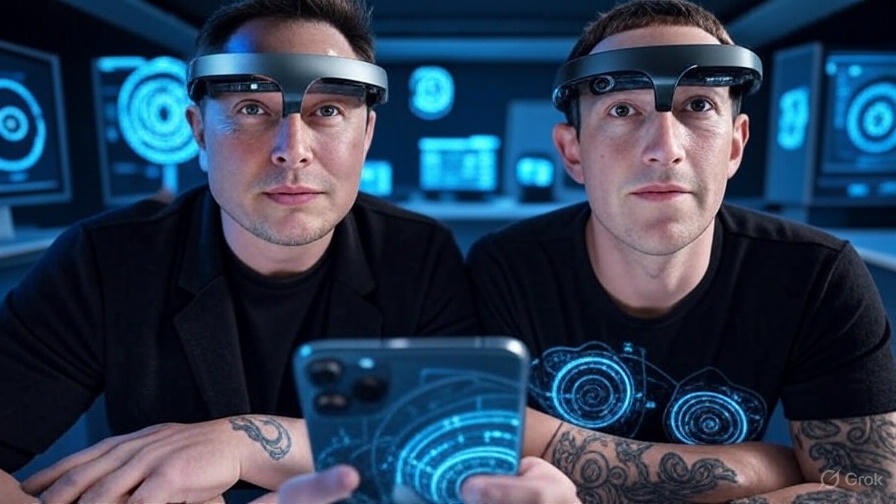
Redefining the Future of Smartphones: A New Digital Era
In just over a decade, smartphones have evolved into essential digital companions — enabling communication, business, entertainment, and more, all in the palm of our hands. But now, tech visionaries such as Elon Musk, Mark Zuckerberg, Bill Gates, and Sam Altman are looking beyond. They envision a future of smartphones that no longer relies on touchscreens or even physical devices.
This shift is driven by groundbreaking innovations — brain-machine interfaces, augmented reality glasses, and wearable tech — that could reshape how we engage with the digital world. These are not just futuristic concepts; they are the foundation of what may soon replace smartphones as we know them.
The Future of Smartphones: Neural Implants, Smart Tattoos & AR Glasses
Elon Musk’s Neuralink: Thinking Beyond Touch
At the forefront of the future of smartphones is Elon Musk’s Neuralink, which is pioneering brain-computer interfaces (BCIs). Neuralink aims to connect the human brain directly with computers, allowing users to type, communicate, and control machines using only their thoughts.
The project recently made headlines by successfully implanting its chip in two human volunteers — a critical step toward a world where smartphones could become obsolete.
Bill Gates and Smart Tattoos: Tech on Your Skin
Chaotic Moon, backed by Bill Gates, is developing high-tech electronic tattoos that act as wearable sensors. These “smart tattoos” can track health metrics, monitor body activity, and even function as communication tools. Essentially, your skin could become your screen — an exciting glimpse into the next generation of digital interfaces.
For those concerned about health and regulation, the U.S. Food and Drug Administration (FDA) continues to monitor developments in this space, ensuring wearable technology meets safety standards.
AR Glasses: Meta and the Future of Visual Computing
Mark Zuckerberg’s AR Vision for the Future of Smartphones
Meta (formerly Facebook), led by Mark Zuckerberg, is investing heavily in augmented reality glasses. These glasses project digital content directly into your line of sight — allowing you to read messages, navigate maps, or take video calls without ever pulling out your phone.
This technology is also central to Meta’s larger plan to build the metaverse — a fully immersive digital universe where users interact through avatars and AR-powered environments. Zuckerberg believes AR glasses will soon become as common as smartphones are today.
Sam Altman’s AI-Driven Future: Seamless and Invisible Tech
OpenAI CEO Sam Altman is helping shape the future of smartphones through advanced artificial intelligence. While not focused on hardware, Altman envisions “ambient computing,” where AI integrates so seamlessly into our lives that we barely notice it.
ChatGPT and other tools from OpenAI are designed to serve as intelligent assistants — capable of planning, predicting, and responding in real-time. In Altman’s vision, AI becomes the invisible thread that connects people to their digital lives, regardless of the interface.
Apple’s Strategy: Evolving the Smartphone, Not Replacing It
While others are racing to kill the smartphone, Apple continues to evolve it. The newly launched iPhone 16 integrates AI features and AR support while preserving the classic smartphone experience.
Apple is also exploring spatial computing through its Vision Pro, a powerful headset designed for immersive interaction. However, CEO Tim Cook has emphasized a user-first approach, saying, “We’re committed to improving what people already use.”
Apple’s strategy reflects a belief that the future of smartphones doesn’t necessarily require abandoning the current model — just refining it.
The Future of Smartphones: Evolution or Revolution?
This divergence among tech leaders points to a philosophical divide:
- Should technology be embedded within us, blurring lines between biology and digital?
- Or should it remain a tool — visible, controllable, and familiar?
Governments around the world, including GOV.UK’s Department for Science, Innovation and Technology, are watching closely, raising questions about privacy, ethics, and digital rights in this rapidly evolving landscape.
Final Thoughts: What Does the Future of Smartphones Mean for You?
Whether you’re excited by neural implants or prefer the familiar iPhone, one thing is certain: the future of smartphones is going to redefine how we live, work, and connect. Will we control tech with our thoughts, wear it on our skin, or continue to carry it in our pockets?
As the next wave of innovation unfolds, your relationship with technology is set to become more personal than ever.
READ MORE:
- Bitcoin Breaks Boundaries: Hits Historic All-Time High Beyond January Peak
- Senate Unanimously Approves ‘No Tax on Tips Act,’ Aiming to Deliver Relief to Service Workers
- U.S. Visa Ban on Foreign Officials Over Online Censorship and Tech Interference
- Taylor Swift Takes Back Her Masters
- Kamala Harris: Inspiring Leadership as VP