
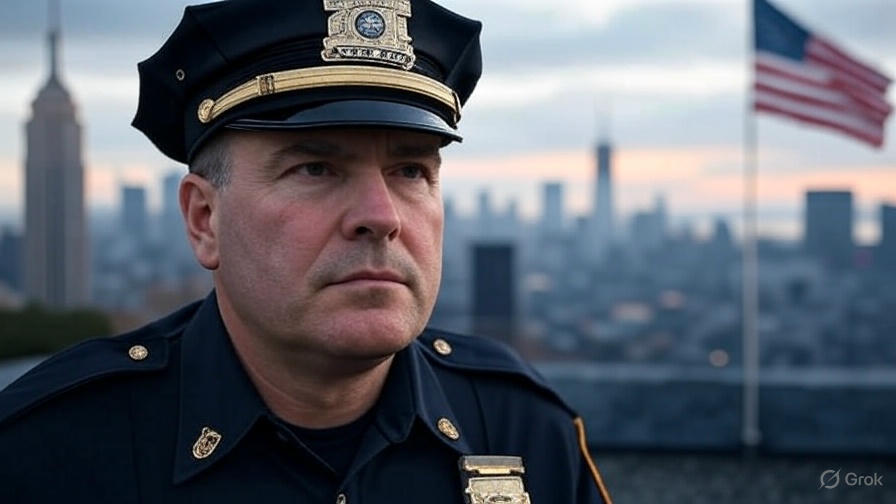
Bernard Kerik, who rose from humble beginnings to become New York City’s police commissioner during the September 11 attacks, died at age 69 after a private battle with illness. Once hailed as a hero for his leadership in the aftermath of 9/11, Kerik’s later years were overshadowed by legal troubles and imprisonment.
From Dropout to Commissioner: The Rise of Bernard Kerik
Born on September 4, 1955, in Newark, New Jersey, Bernard Kerik was raised in Paterson. He dropped out of Eastside High School before enlisting in the U.S. Army in 1974, where he served in the military police in South Korea. He later earned a GED and eventually a Bachelor of Science degree from the State University of New York’s Empire State College in 2002.
Kerik’s early law enforcement career began in 1981 as a sheriff’s officer in New Jersey. He later worked as a chief investigator in Saudi Arabia and joined the New York Police Department (NYPD) in 1986. Over the years, he earned dozens of medals and quickly rose through the ranks.
Bernard Kerik Role During 9/11
Appointed NYPD Commissioner in 2000 by then-Mayor Rudy Giuliani, Bernard Kerik led the department through one of its darkest days—the terrorist attacks on September 11, 2001. Alongside Giuliani, Kerik was at Ground Zero helping coordinate the evacuation and response efforts.
His decisive actions during the crisis earned him national praise. During his tenure, officer morale reportedly improved, and relations with Black and Hispanic communities began to thaw, building on the work of his predecessors.
To learn more about the Department of Homeland Security’s formation in response to 9/11, visit the U.S. Department of Homeland Security.
Controversy and Legal Troubles
Kerik’s post-9/11 reputation began to unravel in the mid-2000s. After briefly serving as Iraq’s interim Interior Minister during the U.S.-led occupation, President George W. Bush nominated him to lead the Department of Homeland Security in 2004. But Kerik withdrew his nomination after revealing he had employed an undocumented nanny and failed to pay related taxes—an admission that triggered several investigations.
By 2006, Kerik faced state charges for accepting unreported renovations to his Bronx apartment from a construction company suspected of mob ties. In 2009, he pleaded guilty to multiple federal charges, including tax fraud and making false statements during his vetting for federal office. He was sentenced to four years in federal prison and served three.
You can read more about federal sentencing guidelines and procedures at the U.S. Sentencing Commission.
Presidential Pardon and Continued Political Advocacy
In 2020, President Donald J. Trump granted Bernard Kerik a full pardon. Following his release, Kerik re-emerged in political circles, aligning closely with Trump and Giuliani. He vocally supported Trump’s claims of election fraud in the 2020 presidential race and was involved in efforts to challenge the election results.
In 2021, he provided documents to the House Select Committee investigating the January 6 Capitol attack. Learn more about the committee’s role at the official U.S. House of Representatives website.
Bernard Kerik’s Personal Life and Legacy
Kerik’s personal life was as complex as his professional one. He was married three times and fathered children in both the U.S. and South Korea. In his memoir, The Lost Son: A Life in Pursuit of Justice, he candidly reflected on personal regrets, including abandoning a child he fathered overseas while in the Army.
He also authored a second memoir, From Jailer to Jailed, chronicling his fall from grace. Beyond his public service, Kerik was a radio host and political commentator.
Despite his tumultuous legacy, Bernard Kerik remained a vocal figure in American law enforcement and politics. “I made some major mistakes, and they catch up to you,” he told New York Magazine in 2005. “But I still believe that my successes over my 30-year career outweigh the errors in judgment.”
READ MORE:
- In Memory of Phil Robertson: The Heart and Soul of ‘Duck Dynasty’
- Trump Grants Clemency in Todd Chrisley $36M Fraud Case
- Remembering Charles Rangel: The Lion of Harlem and a Trailblazer in American Politics
- Drew Barrymore Heartfelt Role as a Mother: Meet Her Daughters, Olive and Frankie
- George Wendt, Beloved ‘Cheers’ Actor Known for Playing Norm, Dies at 76









[…] Ex-NYPD Chief Bernard Kerik, 9/11 Hero and Convicted Felon, Dead at 69 […]
[…] Ex-NYPD Chief Bernard Kerik, 9/11 Hero and Convicted Felon, Dead at 69 […]